Category: Karen O’Brien

Activities related to the Zennström Visiting Professorship in Climate Change Leadership 2026 with Karen O’Brien

Inaugural Lecture Karen O’Brien

Transforming Together: Fast Forward to a Fair Future

Karen O’Brien, the new Zennström Visiting Professor in Climate Change Leadership, delivered her inaugural lecture at Geocentrum, Uppsala University, on 16 March 2026. O’Brien, co-founder of cCHANGE and Professor Emerita of human geography at University of Oslo, led the audience through an inspiring account of her personal and professional journey, showing how the two have informed one another and shaped her approach to climate transformations. She brought a hopeful vision on how to bridge theory and practice for change. Her lecture, titled Scaling Transformative Change for a Just and Sustainable World, was followed by two panel discussions, moderated by Associate Professor Mikael Karlsson. The panel discussions featured both senior and early‑career researchers from Uppsala University and opened up engaging conversations that we hope will continue during O’Brien’s visiting professorship. 
Below is a summary of the lecture. The full event recording is available at the end of this blogpost.
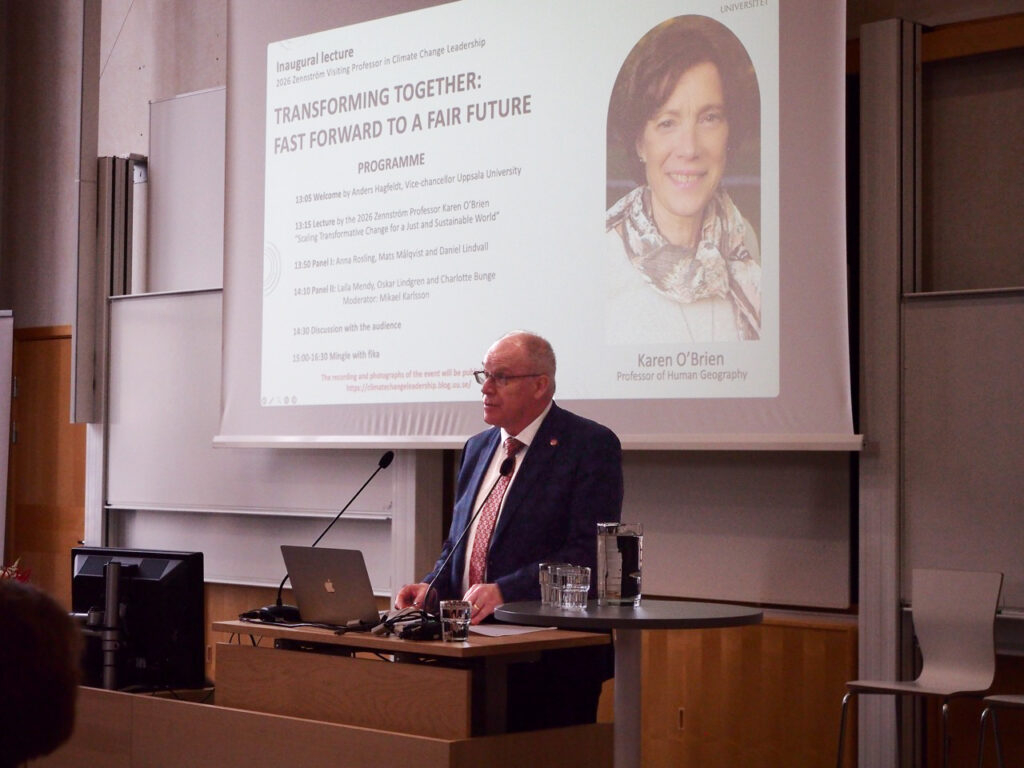
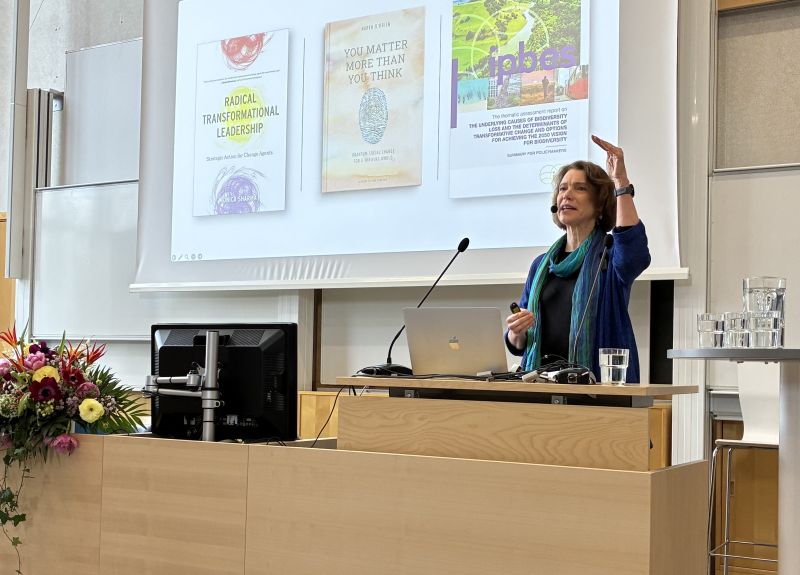
Karen O’Brien during her lecture. Photo by Judith Lundberg-Felten

Opening the event, Vice-Chancellor Anders Hagfeldt underscored that climate change remains a non‑negotiable global threat despite shifting political tides and geopolitical uncertainties. Photo by Emma Löfgren

Scaling Transformative Change for a Just and Sustainable World

“How do we rapidly scale transformative change for a just and sustainable world? And how do we do this in an ethical and equitable manner? For me this means looking at the relationship between individual change, collective change and systems change. Why we – all of us – matter when it comes to this change.”

Karen O’Brien in her inaugural lecture
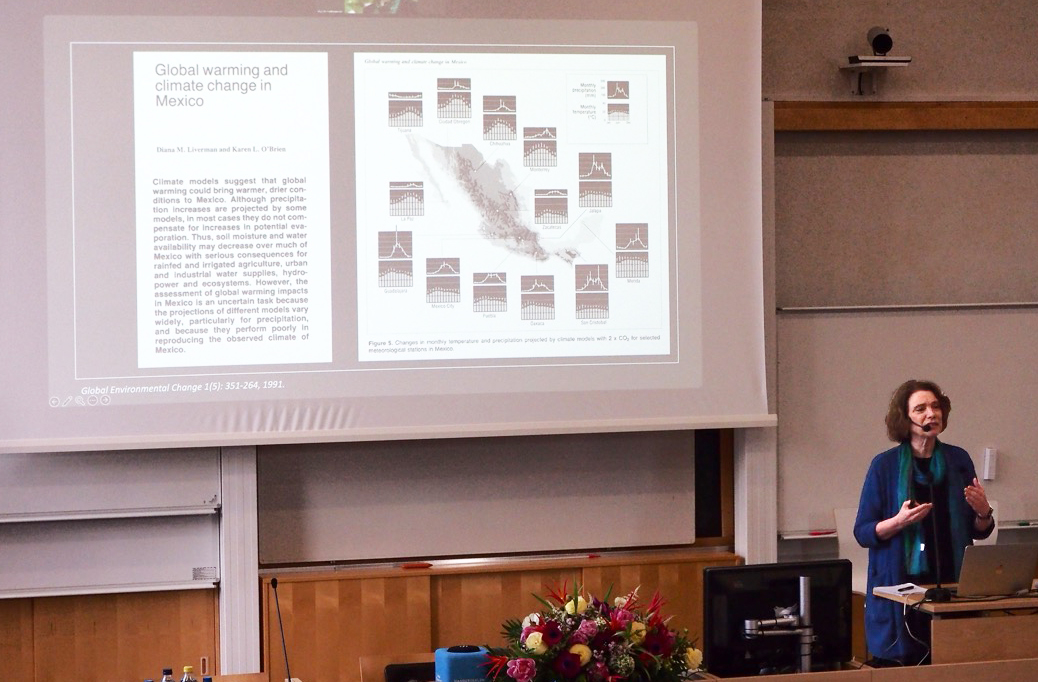
Photo by Emma Löfgren

Climate Research and the Question of Scale

From the beginning of O’Brien’s career, when she studied the impacts of climate change in Mexico, scale has been a continuous theme running through her research. Early on, she noticed the disconnect between the large scale and the small scale in climate science, including how local deforestation interacts with global climate change. This drew her toward examining the relationships between human and natural systems in the Chiapas region, showing how deforestation and local social struggles were closely intertwined.

Resilience, Globalization and Double Exposure

Later on, when O’Brien’s personal life brought her to Norway, she suddenly found herself in a country often described as highly resilient to climate change, and in some ways even a net beneficiary, with milder weather and longer agricultural seasons. This raised a central question for her: Is Norway actually resilient to climate change? As she argued, the answer depends entirely on scale, where you are, what you do, and which systems support your wellbeing and way of life. From a global perspective, Norway is considered relatively resilient compared to other countries, yet this perceived adaptability can easily slip into a dangerous complacency, and risks missing sight of the uneven distribution of benefits and risk, in Norway and beyond. Again, the question of scale was central.

It was during this period that O’Brien began to focus more closely on the differentiated social capacity to adapt to climate change, and tying the effects of climate change together with economic globalization. Bringing these two trends together, she showed together with Robin M. Leichenko how their combined effects systemically create distinct Winners and Losers in the Context of Global Change. What emerged from this work was a recognition that these vulnerabilities are not accidental but systemic, shaped by where people are positioned within broader social, economic, political, and environmental systems and how global trends are interlinked.

From Adaptation to Transformation 

O’Brien stressed that climate change is not a technical problem but an adaptive challenge – one that requires us to think, behave, and act differently. Our responses are shaped by our values, worldviews, and underlying paradigms, which influence how we understand climate change, how we choose to address it, and what actions we see as possible at different scales. Because human activity is altering global systems, she argued, it also means we have the capacity to change them deliberately.

The most significant form of adaptation, then, is transformation: recognizing that we are capable of changing large-scale systems like the climate, and that we can therefore intentionally transform the economic, social, and political systems that drive those changes. She describes this as adaptation as deliberate transformation to sustainability, something reflected, for example, in her recent book You Matter More Than You Think and in the IPBES Transformative Change Assessment, which she co-led.
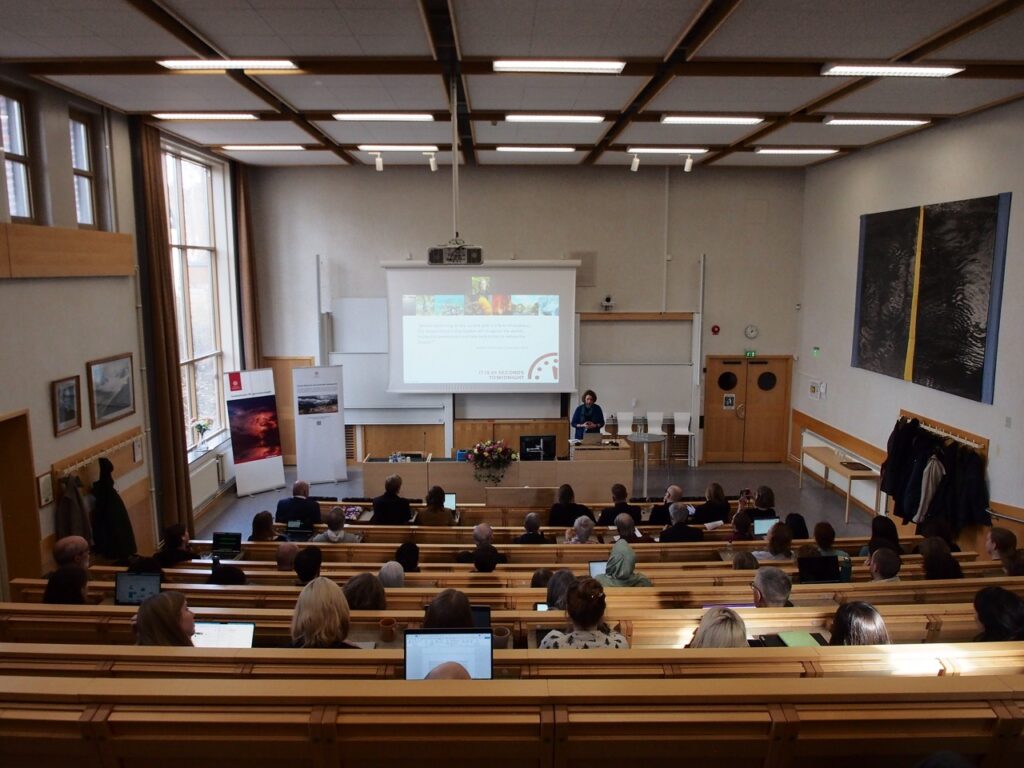
The inaugural lecture took place at Hambergsalen, Geocentrum. Photo by Emma Löfgren

Fractal Change, Agency and the Three Spheres 

O’Brien closed her lecture with the idea of fractal transformation and the need to connect the practical, political, and personal spheres of change. Practical actions, behaviours and technical responses, such as installing solar panels or setting sustainability goals, are of course important, but they remain insufficient without corresponding shifts in the political sphere, where systems, institutions, norms, and incentives are shaped and contested. At the same time, the personal sphere, our beliefs, values, worldviews, and paradigms, is often overlooked, even though it deeply influences how individuals perceive systems and exercise agency within them. When these spheres – and scales – are treated separately, we end up with fragmented responses to interconnected challenges.

Instead, O’Brien proposed a fractal approach rooted in universal values such as dignity, equity, fairness, and integrity, values that can guide action across all scales. People must be understood as subjects of change, not objects to be changed, and we need to stop underestimating our collective capacity for transformation. Even small shifts matter: it is often said that around 10% of a population can tip social norms. Through quantum social change, fractal agency, and value‑driven action, she argued, fair and non‑linear transformations toward sustainability are possible. 

O’Brien will continue her research and other activities on this approach while at Uppsala University until February 2027.
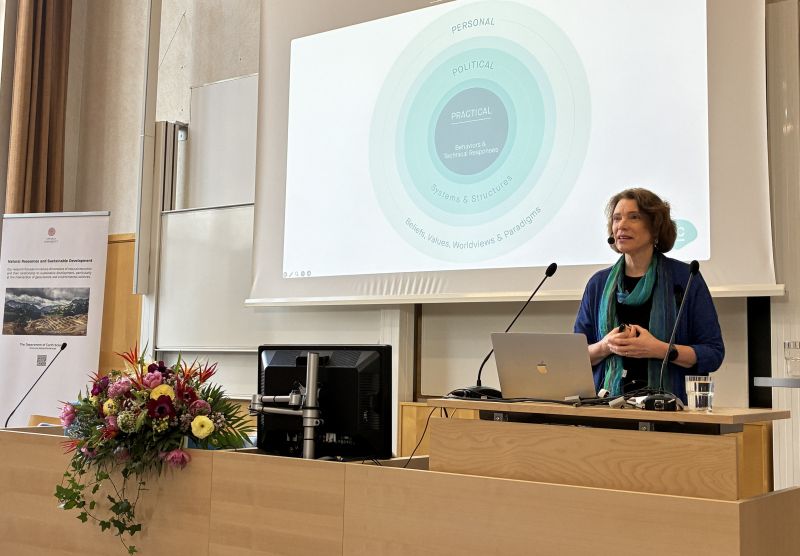
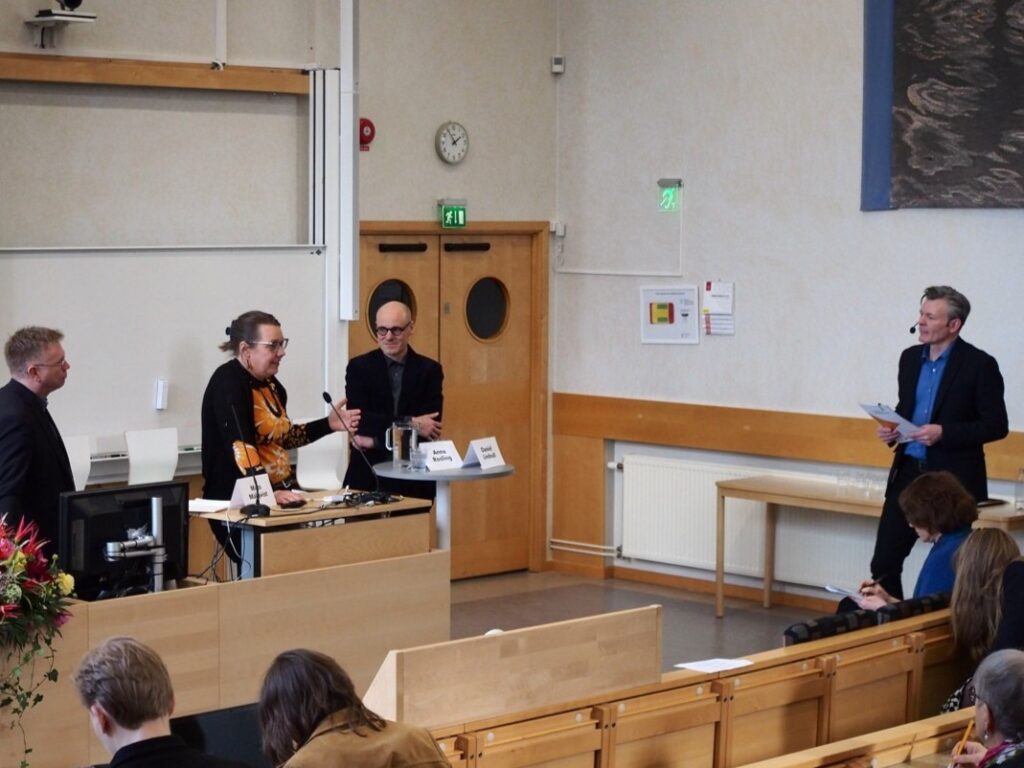
Photo by Judith Lundberg-Felten

Senior researchers panel with Mats Målqvist, Anna Rosling, and Daniel Lindvall, moderated by Mikael Karlsson, from left to right. Photo by Emma Löfgren

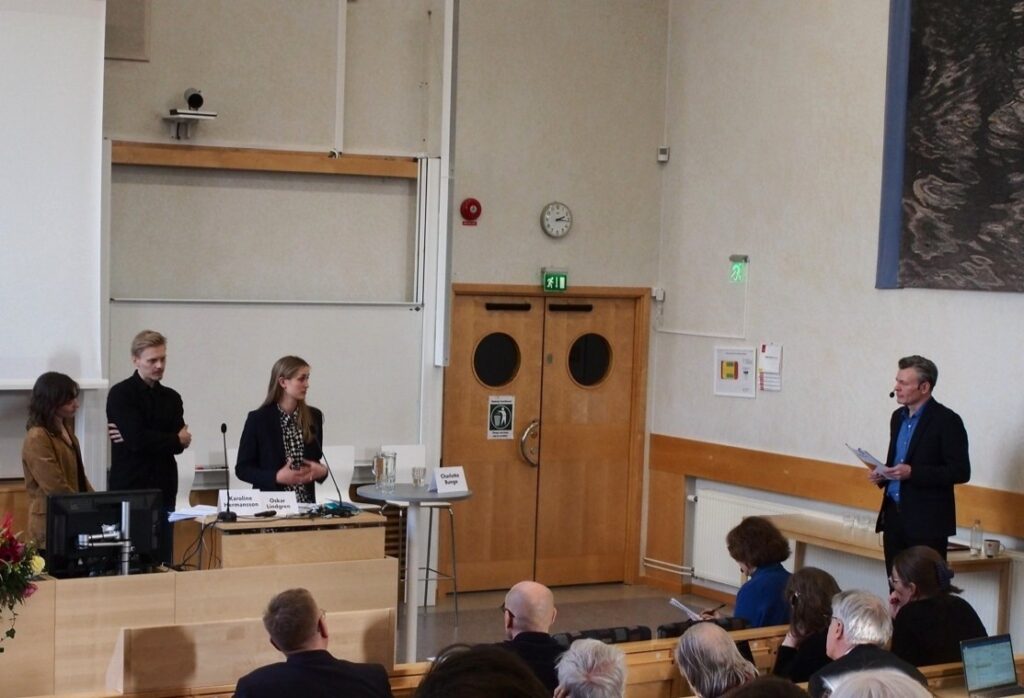
Junior researchers panel with Karoline Hermansson, Oskar Lindgren and Charlotte Bunge, moderated by Mikael Karlsson, from left to right. Photo by Emma Löfgren

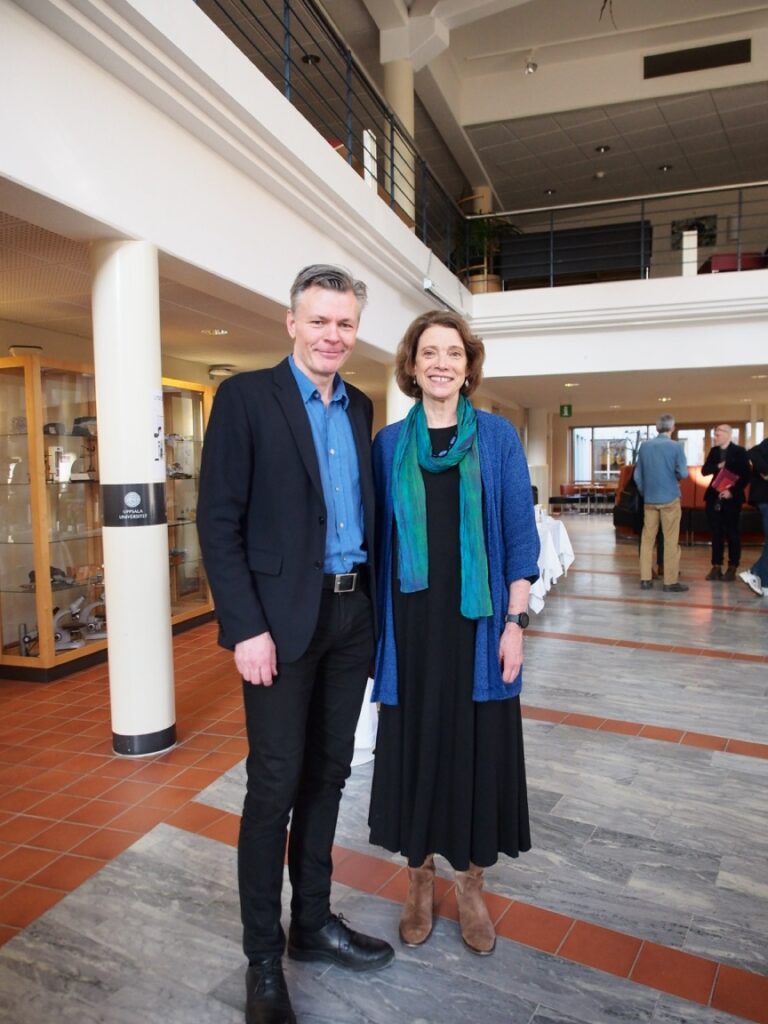
Mikael Karlsson and Karen O’Brien, from left to right. Photo by Emma Löfgren

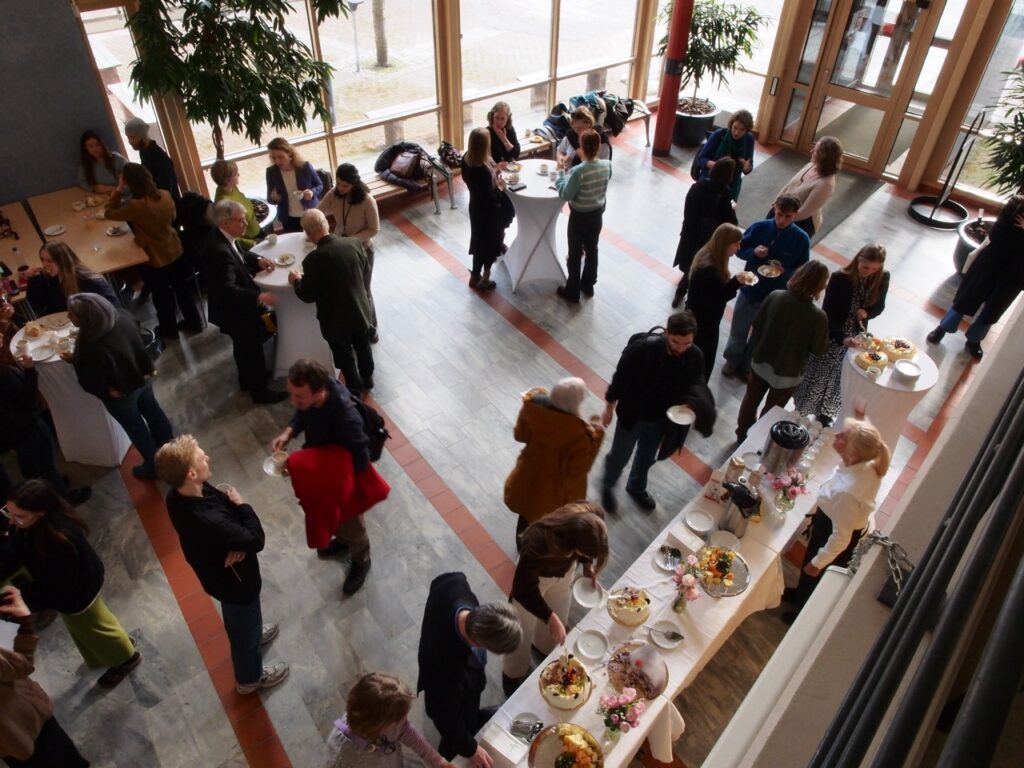
Mingle with cake and coffee after the lecture. Photo by Emma Löfgren

Photo by Emma Löfgren

Thank you to Jayne Glass for her great suggestions on the text in this blogpost.
Connecting Knowledge and Action: Karen O’Brien on Leadership, Narratives, and Transformative Change

On 2 March 2026, Karen O’Brien has taken up the position of Zennström visiting professor in Climate Change Leadership at Uppsala University. Karen is Professor Emeritus at the Department of Sociology and Human Geography at the University of Oslo and is internationally recognised for her work on how climate change affects people and societies.

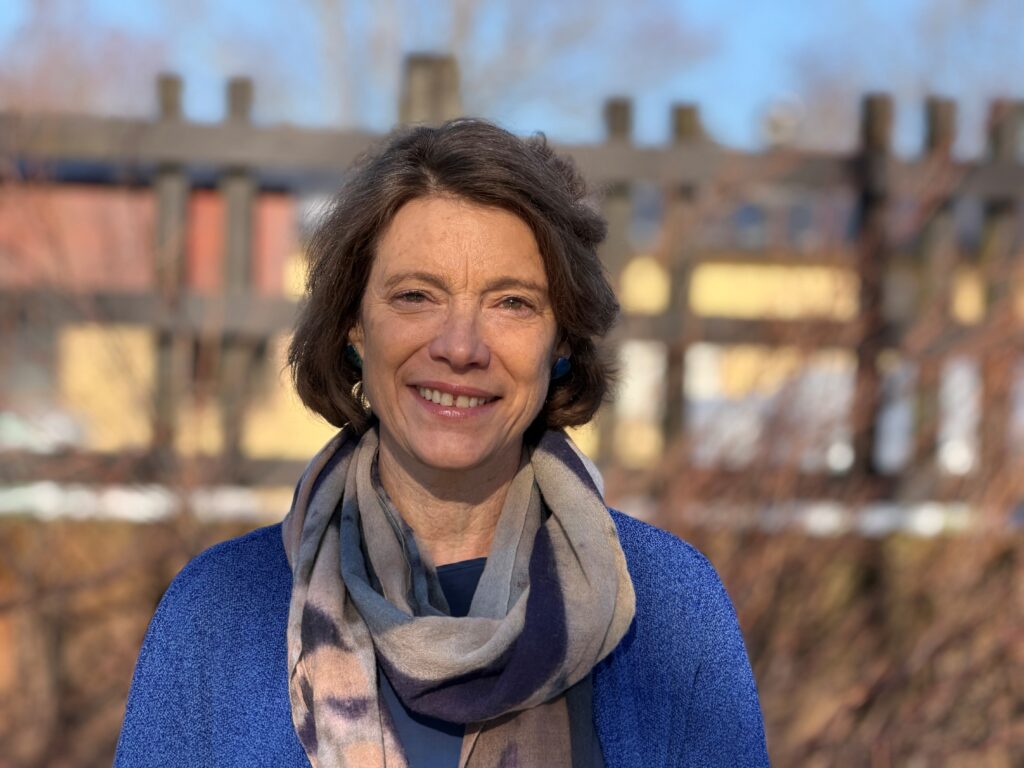
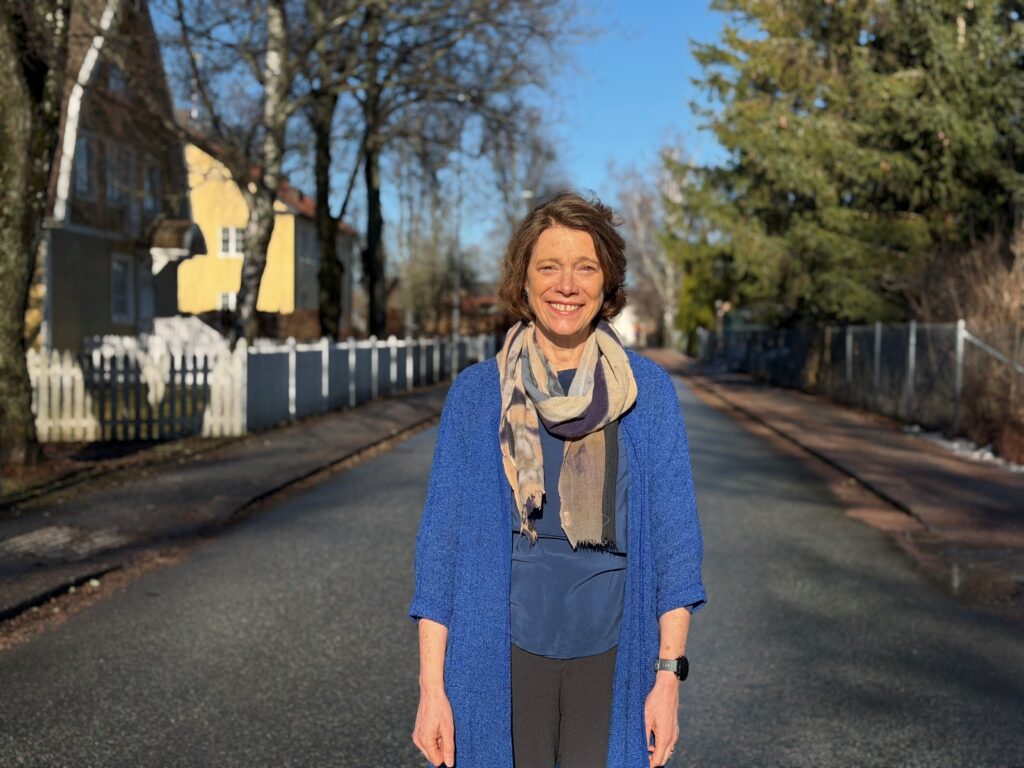
Karen O’Brien, professor emeritus at the Department of Sociology and Human Geography at the University of Oslo, holds the 2026 Zennström Visiting Professorship at Uppsala University for the period March 2026–February 2027. Photo: Malin Eivergård

Social and human dimensions of climate change

Karen’s research focuses on the social and human dimensions of climate change and its consequences for human security. Karen is also  co-founder of cCHANGE, an organisation that supports society’s engagement in the transition to sustainability. With Karen O’Brien on board, Uppsala University gains a climate researcher who not only highlights the problems, but also provides clear, practical advice on how individuals and communities can act to meet the challenges of climate change.

Through her research Karen aims to find answers  to the questions:

  • How can societies adapt to changes that are already happening, such as extreme weather and environmental risks?
  • How can our everyday habits and values change to support more sustainable lifestyles?
  • How can organisations and local communities become more flexible and creative in their solutions?

Contribution to international climate and biodiversity panels and assessments

Karen O’Brien has contributed to several of the UN Intergovernmental Panel on Climate Change (IPCC) reports, in which researchers from around the world compile facts about the climate and how it affects people, communities and nature. The IPCC helps decision-makers with knowledge about risks, future scenarios and possible measures to reduce emissions and adapt society to a warmer climate. In her reports, O’Brien has contributed with knowledge about how social and cultural factors affect climate action and adaptation.

Karen has also been a co-chair of the Transformative Change Assessment by the  Intergovernmental Science-Policy Platform on Biodiversity and Ecosystem Services’s (IPBES). The assessment analyses the underlying causes of biodiversity loss and the fundamental societal changes needed to achieve the 2050 Vision for Biodiversity, which describes a world where “biodiversity is valued, conserved, restored and wisely used, maintaining ecosystem services, sustaining a healthy planet and delivering benefits essential for all people”. The report provides guidelines how such change can be achieved, identifies barriers to change, and what practical strategies and actions can promote equitable and sustainable transformative change globally.

Climate Leadership – from small steps to systemic change

Malin Eivergård, communicator at the Department of Earth Sciences, has interviewed Karen upon her arrival to Uppsala. Below we share Karen’s answers on climate leadership, communication, agency and responsibility.

What does climate leadership mean to you in today’s political and social climate?

Climate leadership means acting with integrity based on a recognition that we are one with nature in a way that acknowledges the justice dimensions of climate change — including intergenerational justice. Today, when few people in positions of authority seem willing to take climate change seriously, we need individuals, communities, organizations, and businesses to be climate leaders.

During your time as Zennström Professor, what kind of impact do you hope to make at Uppsala University?

I hope to discuss perspectives and approaches to transformative change and how they can be translated into action. I’d also like to learn more about how faculty, staff, and students are building bridges between knowledge and action.

What is the biggest misconception about societal transformation in the climate transition?

We often dismiss small and incremental changes as unimportant, when in fact small changes can make a big difference when they address the underlying causes of climate change and nature’s decline.

Recognizing that we are all part of the solution to climate change can create agency to contribute to systems change according to Karen O’Brien. Picture by Ma Ti (unplash).

Why climate denial persists — and how to respond

How do you view the rise of climate denial and climate skepticism?

The rise can be linked to the systematic spread of disinformation and misinformation, and to our failure to create a compelling narrative that recognizes people as the solution to climate change, rather than the problem. When we reduce people to their climate footprints and insist that they need to change, we overlook their agency and potential to contribute to systems change.

Why do you think some people resist or reject climate science?

There are many reasons, including cognitive lock-in and vested interests. In general, however, it is easier to look at the world through our current beliefs and assumptions than it is to question them and open our minds to other possibilities. It’s not surprising, as the willingness to be wrong takes some humility, but it is nonetheless harmful.

How should researchers and leaders respond to climate denial without deepening polarization? 

Asking questions, listening to people’s answers, and sharing data, information, and examples that they can relate to is often more helpful than telling people what to think. People tend to see and defend what they already believe, and this can reinforce polarization.

Is it still meaningful to engage with climate deniers, and if so, how?

I believe it is meaningful because climate deniers often include family members, friends, neighbors, and colleagues; we often limit ourselves to speaking with people who already care about climate change.  But it is also important to engage with the sources of disinformation and misinformation, recognizing that climate change challenges some worldviews and threatens the interests of those who benefit from the status quo, which includes many of us. 


Climate communication is more effective when we connect to values and listen to what the people we talk to care about, says Karen O’Brien. Picture by Malin Eivergård

Stories, values, and the power of climate communication

How important is communication in advancing climate action and climate leadership?

It’s essential. And it is more effective when we connect it to the values that we care deeply about and help people .

What distinguishes effective climate communication from communication that fails?

Effective communication involves both speakers and listeners (and writers and readers). To advance climate action, we must communicate authentically and listen in ways that connect with people and what they care about – not just what we care about. Effective communication often involves stories that encourage inquiry and reflection. One-way channels that convey climate information tend to fail.

How can universities better translate scientific knowledge into societal change?

There has been a shift away from translation of research towards knowledge co-production, but research itself still tends to be very abstract and jargony for many. The arts can play an important role in helping people to engage with and interpret research.

What role do narratives, values and emotions play in communicating climate science?

The three are closely related: communicating a compelling narrative about climate change that connects to people’s values can evoke emotions that motivate action. The presentation of research results in a neutral, dry manner usually often works better for academic audiences than for mobilizing action.

We can make an impact by engaging people in conversations and being part of initiatives related to the things we care about, says Karen O’Brien, and names gardering as one example. Picture by Sandy Clarke (unplash).

How we care for ourselves and what we care about  can create agency 

You often speak about human agency. What does that mean in a time of climate fatigue? It’s easy to feel tired and burnt out, especially when we do not see the results that we wanted.

To have agency in a time of climate fatigue involves recognizing that we matter and make a difference, even if we do not see immediate outcomes and impacts. Still, it’s important not to become martyrs and burn out. We are part of a collective, and sometimes it’s essential to step back and take care of ourselves, including our mental and physical health and our relationships.  Individual sustainability and global sustainability are linked, and we need regenerative approaches to both. 

What responsibility do researchers have beyond publishing scientific results?

It’s easy to feel that our impact is limited to projects, publications, and citations. But impact can include engaging people in conversations, talking to the media, establishing relationships of trust, and being part of initiatives related to the things we care about – music, art, sports, children’s education, gardening.  In other words, researchers have an opportunity to convey climate science across their multiple spheres of influence.

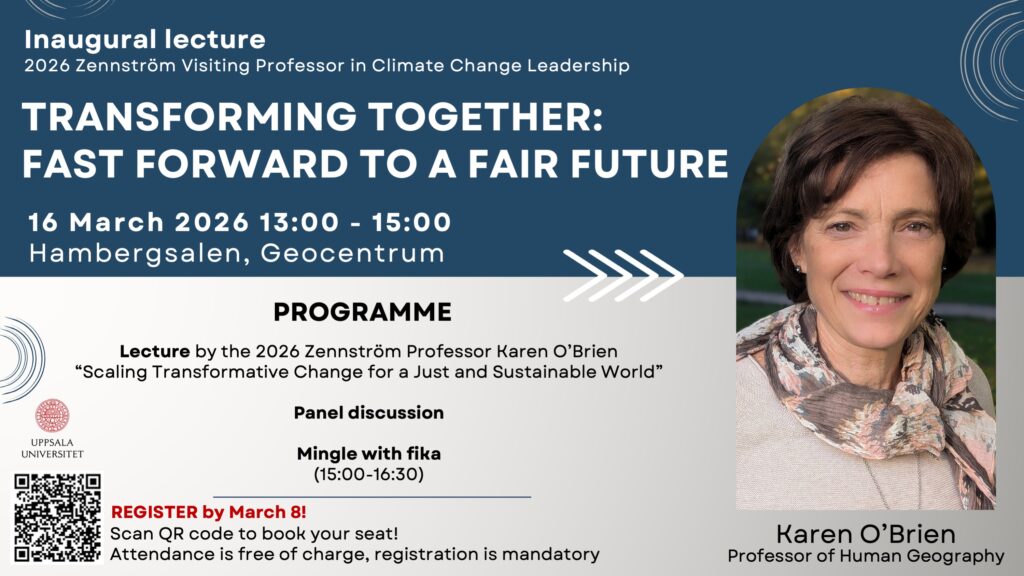
Announcement: Inaugural lecture – “Transforming Together: Fast Forward to a Fair Future “

Welcome to the inaugural lecture and panel discussion with Uppsala University’s Zennström Visiting Professor in Climate Change Leadership 2026, Karen O’Brien.

Karen O’Brien is co-founder of cCHANGE and Professor Emerita of human geography at University of Oslo. Building on decades of research on the social and human dimensions of environmental change, her current work focuses on connecting theory with practice to scale equitable and sustainable transformations. We are delighted about her appointment as the ninth Zennström Visiting Professor in Climate Change Leadership at Uppsala University.

The inaugural lecture is a welcome for Karen. The event will be held in English and takes place on Monday 16 March 2026 starting at 13:00 in Hambergsalen, Geocentrum (Villavägen 16) Uppsala University.

Programme of the event

  • 13:05 Welcome message by Anders Hagfeldt, Vice-chancellor Uppsala University
  • 13:15 Lecture by the Zennström professor 2026 Karen O’Brien

    Scaling transformative change for a just and sustainable world
    The scale of the climate crisis challenges us to think, organize, and act differently. To do so, we may need to relate differently to ourselves, each other, nature, and the future. Drawing on my past research on climate change impacts, vulnerability, and adaptation and the recent Transformative Change Assessment of the Intergovernmental Science-Policy Platform on Biodiversity and Ecosystem Services (IPBES), this talk will focus on the importance of engaging with the practical, political, and personal spheres of transformation, as well as my current work on fractal approaches to scaling transformations to sustainability. Finally, I will consider some of the implications for climate change leadership, with an emphasis on why we matter more than we think.

  • 13:50 Panel discussion “Transforming Together: Fast Forward to a Fair Future” 
    Panel I: Anna Rosling, Mats Målqvist and Daniel Lindvall. 
    Panel II: Laila Mendy, Oskar Lindgren and Charlotte Bunge
    Moderator: Mikael Karlsson
  • 14:30 Discussion with all participants and the audience
  • 15:00 – 16.30 Mingle with fika

Please note that registration is mandatory and the number of seats is limited. The deadline for registration is 8 March 2026.